Old plaster on wood strips
Loose, crazed or bulging plaster pinned back to its lath or rebuilt in passes, flat enough to repaint.
How plaster and lath repair worksPlaster · Ceilings · Cracks · Rentals
Crumbling plaster, thaw stains, holes and drooping ceilings repaired, feathered out to meet the old surface and handed back ready for your paint.
Once you have rung, the local drywall pro taking the job calls to hear the wall's story and price it.
Call 7 days, 7am–9pm
You hear the figure first; no date is pencilled in until you give the go-ahead.
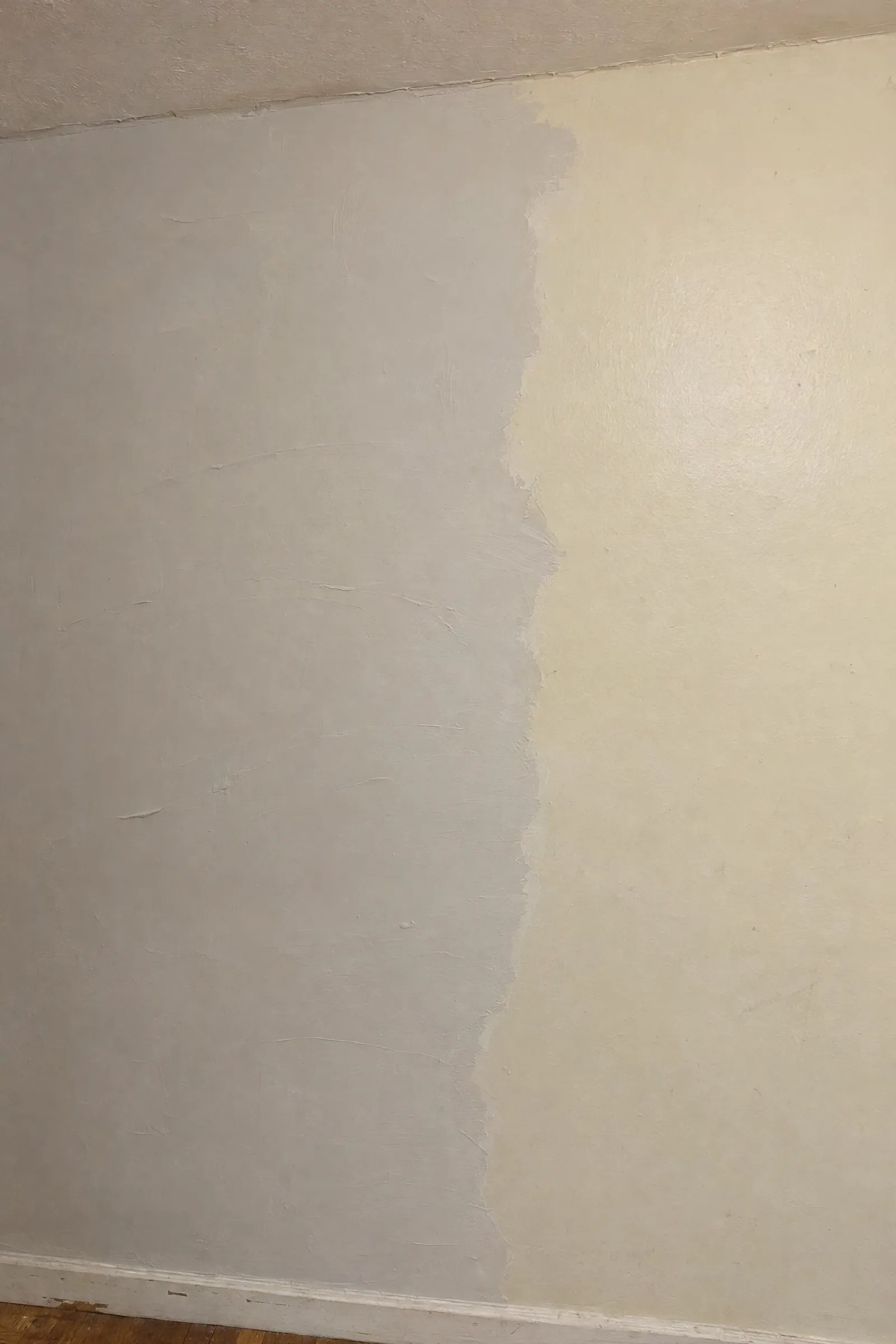
Most walls in this city went up long before gypsum board was common, so the right repair depends on what is under the paint. Open whichever card describes your wall; each page sets out the sequence of the work and how long every coat sits before the next one.
Loose, crazed or bulging plaster pinned back to its lath or rebuilt in passes, flat enough to repaint.
How plaster and lath repair worksTea-colored rings and spongy patches near exterior walls, dried out first, then rebuilt and sealed.
Ice-dam ceiling repair, step by stepCorner, door-frame and joint cracks reinforced and coated so they are much less inclined to open up again.
Crack repair in plaster and drywallAnchor holes, knob dents and scuffed corners filled between tenants and primed for whoever paints next.
Turnover patching for landlordsSome damage worsens the longer it sits, and some can ride until a slower month. The split below is about risk to the house and to the people in it, not about looks.
Before anything else, flip off the breaker that powers the fixtures nearest the bulge, move everyone out of the space below, and stand a pail under the lowest spot. Soaked plaster and board turn heavy, and a belly that holds water can let go with little warning. Once the water stops arriving, the ceiling needs time to dry before anything is rebuilt.
If a patch of plaster flexes, rings hollow, or bellies out, the keys anchoring it behind the lath have broken. Left alone, a loose zone tends to spread, and a slab can drop. Found early, much of it can usually be pinned back rather than torn out.
A crack that is wider than when you first spotted it, or one that turned up along with a door that now rubs, deserves a look from someone who understands framing. Closing it is the last step, after the cause is known.
Thin cracks at inside corners or over doorways that have not changed in months are cosmetic. Add them to the list for whenever that room is next repainted, which keeps the calendar simple.
A mark from a leak repaired long ago, a handful of popped fasteners or a shallow dent will not get worse in a hurry in a dry room. Bundle them with other touch-ups so one booking clears the lot.
Should an insurance adjuster or a landlord want proof of what happened, pictures taken before anything is moved spare everyone a round of questions later. We can't advise on claims or coverage; the notes below simply describe a record that holds up.
Start with a shot from the doorway that takes in the entire room, then move close on each stain, crack or hole with a tape stretched alongside it. Shoot the ceiling square on and again at a low angle, because a droop reads best from the side. If rugs, furniture or boxes got wet, capture them where they ended up.
Jot the date the damage first showed, the weather around then (a thaw, a deep freeze, a soaking rain), and anything you did about it, like closing a valve or carrying things out. Hold on to receipts for fans, tarps or pails. A dated note on paper or in your phone does the job.
Tenants should let the landlord know in writing early on. Owners should check with their insurer about what they want to see before repairs begin. The same pictures can come to us too; they help the local pro price the work.
Census counts show just 239 of the city's 7,024 homes were built in 1990 or after, and about 2,265 come from the 1950s through the 1980s. Postwar houses are more likely to have gypsum board than plaster, and board fails in its own ways.
Fasteners that creep out leave small round bumps, often in a line down a stud. The usual cure is a screw set just beside each one, the old nail tapped in below the face, and two or three skim passes over the spot, each allowed to dry first.
Where the roof is built on trusses, a gap that opens along the tops of inside partitions each winter and shuts each summer usually means truss uplift. Re-taping it snug tends to split again; a flexible corner treatment or crown molding is often the more durable plan.
Taped joints can telegraph as faint stripes, and metal corner bead by a doorway dents with one bump from a chair. A crushed bead comes out and a fresh length goes on, instead of being buried under filler, then it gets coated and feathered.
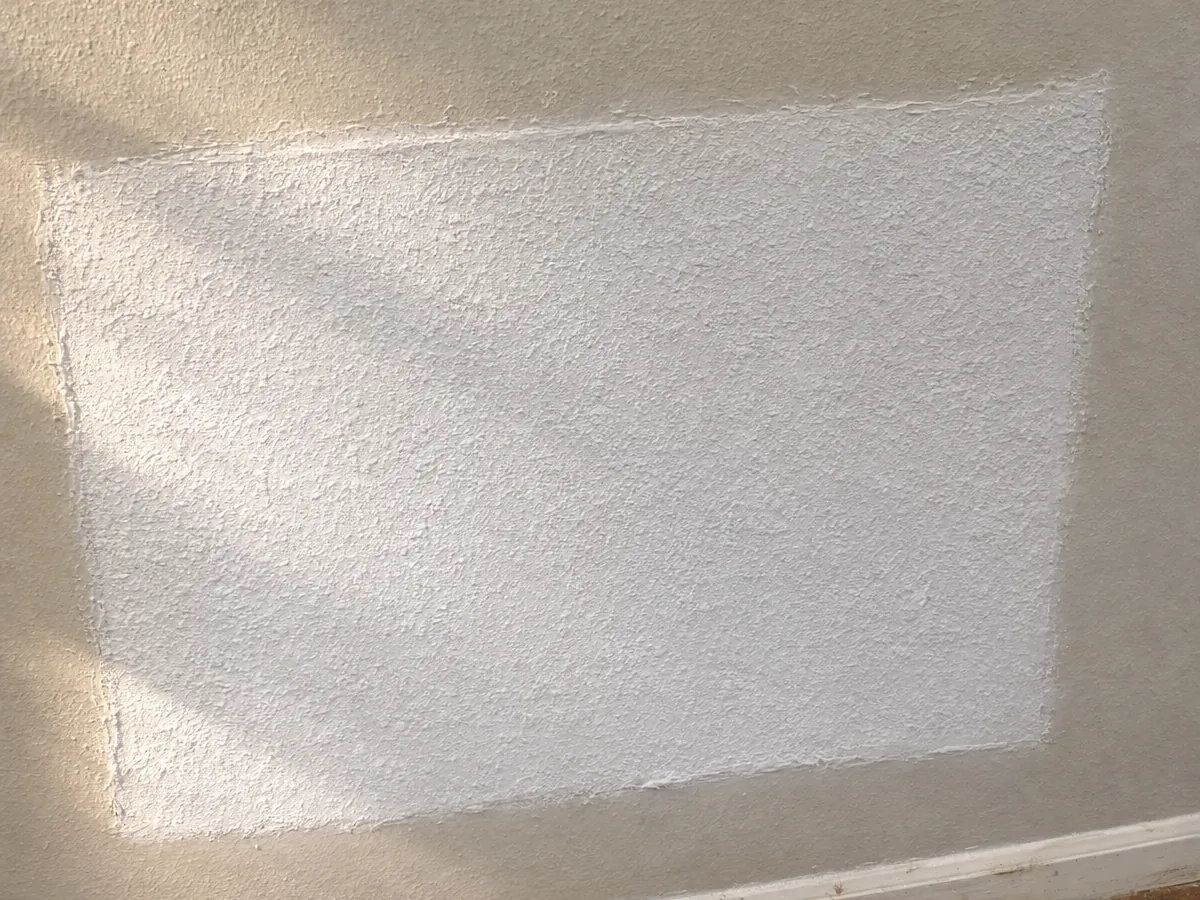
Ten minutes spent on these makes the first conversation shorter and the figure you get closer to the mark.
Drywall work runs on drying time, so a repair is planned in coats rather than hours. This is the sequence, starting with the moment you reach out.
Use the phone link up top, text a few pictures, or complete the quote form. We note what happened, which room it is in and roughly when you hope to have it done.
The drywall pro who would carry out the work goes over the damage with you and lays out the price and the probable number of days. Nothing is pencilled in until you have that figure and are happy with it.
Wet areas have to dry out first, and some jobs need a room set aside for two or three days. The start date is chosen with both in mind.
Loose material is trimmed back, the opening is filled or reinforced, and compound is spread in light layers. Every layer sits overnight or longer before it is sanded and the next one follows.
After the final layer is dry and smooth, texture goes on to suit the surrounding surface and the spot is primed. What you get back is a surface ready for your own brush or your painter.
Roughly half of the occupied homes in North Adams are rented, so plenty of repairs here hang on a lease running out, a sale or a photographer booked for the listing. The trick is ordering the work so paint goes on last.
Holes left by shelf brackets and TV mounts, a knob-shaped hole behind a door, scraped hallway corners, and old patches nobody primed. Each is a small task, and several can share a single booking.
Fine old cracks in plaster come with a house this age and rarely bother a buyer or an inspector. Put the time and money toward holes and stains instead.
Repairs go first, primer second, paint third. Leave a full day or more between the last primer coat and the painter's start, and longer in a chilly or damp house. If the painter is already on the calendar, pass along the date so the repair can be planned backward from it.
Plaster and joint compound make a fine powder that drifts. A careful repair plans for it before the first cut; these are the points worth raising with the pro.
Furniture is pulled away from the wall or draped in sheeting, and the floor gets drop cloths taped down along the edges so nothing slides. Clearing knick-knacks and frames the evening before speeds things up.
Heat registers and cold-air returns in that room are masked off, and the blower is best switched off while sanding goes on so powder is not drawn into the ductwork.
A zippered plastic door, or sheeting taped across the frame, stops dust from drifting through the house. It is worth asking for on any job that involves cutting plaster.
Sanders hooked to a shop vacuum, or wet-wiping small spots instead of sanding them, cut the dust sharply. If the house predates 1978, old paint could hold lead; ask for a test before any sanding, and lead-safe methods if it turns up.
North Adams averages a January high of about 32°F and a low near 14°F, and it falls to zero or below about nine times a winter. That seesaw across the freezing mark drives most seasonal wall and ceiling damage here.
Warmth leaking from the house into the attic melts the snow on the roof deck; the melt trickles to the chilly overhang and freezes into a ridge. Fresh melt collects behind the ice, works its way under the roofing and turns up indoors as tan rings or blistered paint high on exterior walls, usually during a thaw.
On the bitterest nights, supply lines in exterior walls or unheated corners can freeze and split. The damage often stays hidden until the thaw: a damp patch under a bathroom, or a stain creeping down a wall.
Old wood framing shrinks in dry, heated winter air and plumps back up in muggier months. Plaster cracks that gape in January and nearly vanish by July are seasonal movement, and are best repaired in a mild stretch.
Snowmelt and April rain can show up as damp marks low on basement or ground-floor walls. The water has to be dealt with first; board or plaster replaced while the wall is still wet tends to fail a second time.
Work is scheduled across the city and the towns on its borders. Every job runs in the same order: a figure, a start window, the coats, then primer.
Say what happened and when you would like it sorted. A local drywall pro goes through your note, rings you and works out a price with you before anything is put on the schedule.
Call 7 days, 7am–9pm
The drywall pro who will price your wall rings you to walk through it and pencil in a start window.